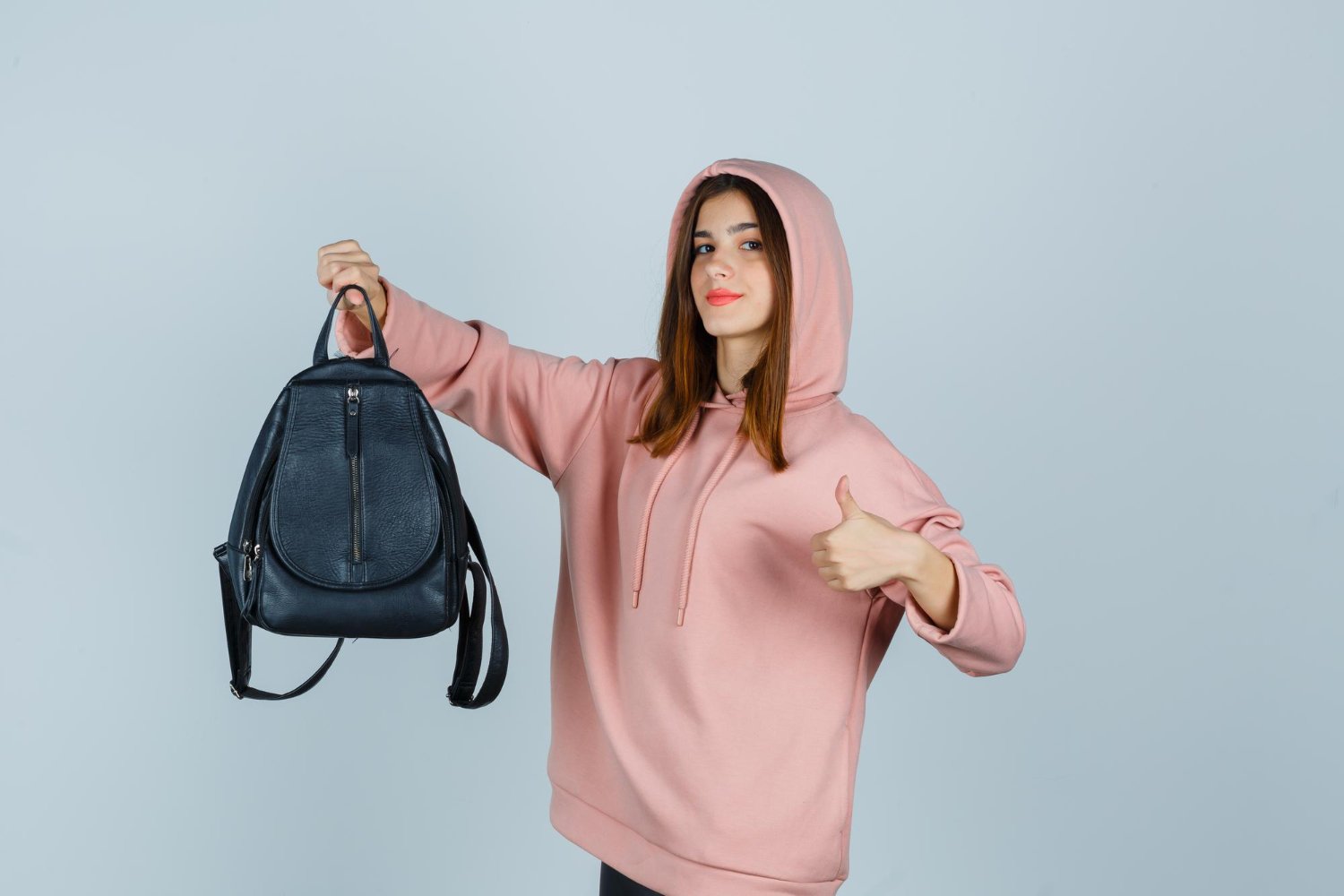

There is something slightly unexpected about carrying a backpack with workwear. The clothes may be sharply pressed, the shoes carefully chosen and the blazer cut to sit just right, yet the backpack brings a different energy to the outfit. It is practical, familiar and a little less rigid than the traditional office handbag.
That contrast can work beautifully when it is intentional.
The mistake is to think that any backpack can be thrown over a work outfit simply because it is convenient. A sporty nylon backpack can look out of place with a tailored suit, just as a tiny, highly polished backpack may feel impractical with relaxed office clothing. The material, proportions and details of the bag need to make sense with what you are wearing.
Once you stop thinking of the backpack as merely something that carries your belongings, choosing one for work becomes much more interesting.
Let the Clothes Decide What Kind of Backpack You Need
Start with the outfit, not the bag.
Look at what you are wearing and ask what quality dominates. Is it sharply tailored? Soft and understated? Feminine? Minimal? Relaxed? The answer gives you a useful starting point for choosing the backpack.
Take a classic combination of tailored trousers, a tucked-in shirt and a blazer. The outfit already has plenty of structure. A backpack with clean lines and a firm shape will sit comfortably within it.
Now change the outfit to wide-leg trousers, a fine knit top and loafers. The clothes have more movement and less formality. A slightly softer backpack can make more sense here.
This is why a leather backpack for women can be such a useful choice for a work wardrobe. Leather naturally has enough visual weight to prevent the backpack from looking like something borrowed from a weekend wardrobe. At the same time, the familiar backpack shape keeps the outfit from becoming too formal.
When Your Workwear Is Very Tailored
A sharply tailored outfit can make a backpack look surprisingly modern.
Imagine charcoal trousers, a white shirt, a fitted blazer and pointed flats. Instead of reaching for a traditional handbag, add a slim backpack in black or deep brown. The bag’s clean geometry echoes the trousers and blazer without copying them.
The important detail is restraint.
A backpack covered in visible pockets, oversized zips or contrasting sporty details can interrupt the neatness of tailoring. A simpler design keeps the clothing as the focus.
This combination is particularly useful when you have a long commute or spend part of the day moving between different locations. You get the carrying comfort of a backpack without making the rest of the outfit look casual.
With a Skirt, Think About Length
Skirts create a different styling problem because the bag sits behind the body rather than beside it.
A knee-length pencil skirt and blouse usually look best with a smaller, more compact backpack. Something too large can make the lower half of the outfit look heavier than intended.
With a midi skirt, there is more room to play with proportions. A medium backpack can work particularly well when the skirt is paired with a fitted top or tucked-in shirt.
The same idea applies to pleated skirts. Because the skirt already has movement and texture, the backpack does not need elaborate detailing. A smooth finish can provide a quiet contrast to the folds.
Think of it like editing an outfit. If the skirt is doing the interesting work, let the bag be uncomplicated.
A Backpack Can Make a Dress Feel Less Formal
Work dresses often fall into a strange category. Some are so polished that they can feel slightly overdressed for an ordinary day at the office, while others are so relaxed that they need something structured to look professional.
A backpack can solve both problems, depending on the design.
A fitted midi dress with a sleek backpack feels contemporary rather than overly formal. The backpack breaks up the dress’s seriousness without making it casual.
With a shirt dress, you can go in the opposite direction. Choose a backpack with a little more structure and the combination becomes neat and office appropriate.
This is also where colour becomes useful. A black backpack against a pale dress creates a defined contrast. A tan or brown backpack can soften darker clothing. You don’t need the bag to match your shoes or belt. A related tone is often enough to make the combination feel considered.
Use Leather When You Want the Backpack to Look More Grown-Up
Material can completely change how the same backpack silhouette is perceived.
Canvas, nylon and technical fabrics naturally lean casual. They can look excellent with relaxed trousers, knitwear and everyday office clothing, but they may struggle against formal tailoring.
Leather has a different presence.
A leather backpack for women can sit comfortably beside polished shoes, tailored trousers and structured outerwear because the material carries a certain visual seriousness. It also works particularly well if your office wardrobe already includes leather belts, loafers or boots.
You do not need a highly decorated design. In fact, a simple leather backpack can often do more for an outfit than one with multiple embellishments.
The surface itself provides enough interest.
Try a Backpack With Monochrome Dressing
One of the easiest ways to make a backpack look intentional is to build an outfit around one colour family.
Consider an all-black outfit with black trousers, a black top, black loafers and a black backpack. Rather than looking repetitive, the different textures keep the outfit interesting. A smooth backpack against knitted fabric and tailored wool creates subtle variation without introducing another colour.
The same idea works with cream, beige, brown and navy.
If you prefer a little contrast, let the backpack be the one element that breaks the monochrome effect. A deep burgundy backpack with an otherwise neutral outfit can add personality without turning the bag into the entire story.
What About Relaxed Office Dressing?
Not every workplace calls for suits and pencil skirts. If your wardrobe consists of straight-leg trousers, shirts, knit tops, and loafers, a backpack can fit in naturally.
This is where you can experiment with texture and shape.
A slightly rounded backpack can soften a crisp shirt. A boxier design can bring definition to a loose cardigan. A compact backpack can work with cropped trousers and ballet flats when you want the outfit to look neat without appearing overly formal.
You can also use footwear to determine how casual the backpack should be.
Loafers and sleek flats allow you to use a slightly more relaxed backpack without losing the workwear feel. Trainers make the combination more casual, so the rest of the outfit needs enough polish to keep the look appropriate.
Be Careful With Oversized Workwear
Oversized shirts, wide trousers and roomy blazers can look excellent together, but adding a huge backpack to the combination may push the proportions too far.
This does not mean oversized clothing and backpacks cannot coexist. It simply means the bag needs some definition.
For example, pair wide trousers with an oversized shirt, then choose a medium backpack with a firm base. The bag still has enough space for your belongings but does not become another large shape competing with the clothes.
The reverse works too. If your outfit is fitted, you can afford a slightly larger backpack without creating the same visual heaviness.
Do Not Ignore the Details
Sometimes it is not the overall shape of the backpack that makes an outfit feel wrong. It is one small detail.
A shiny metallic zip may look perfectly fine with an evening-inspired outfit but slightly jarring with understated workwear. Heavy buckles can make a minimalist outfit look more rugged. A brightly contrasting logo can draw attention away from carefully chosen tailoring.
Look at the smaller elements: straps, handles, fastenings, stitching and pockets.
If your workwear is quiet and refined, a backpack with similarly restrained details will usually feel more natural. If your wardrobe is more expressive, the bag can have a stronger design without looking disconnected.
Match the Bag to Your Shoes, But Do Not Copy Them
No rule says your bag and shoes must be identical.
In fact, an exact match can sometimes make an outfit feel too carefully coordinated. Instead, look for a connection.
Black loafers and a dark brown backpack can work with an outfit containing warm neutral shades. Tan shoes can sit comfortably alongside a beige or camel backpack. Burgundy shoes can pick up a similar undertone in a darker bag.
Texture can create the connection too. A leather shoe beside a leather backpack creates continuity even when the colours differ.
The aim is for the accessories to look as though they belong to the same wardrobe, not as though they were purchased as a set.
Know When the Backpack Should Stay at Home
As useful as a backpack can be, some work occasions call for a different bag.
A client dinner, office celebration or formal evening event often calls for something smaller. This is where clutch bags become useful.
A simple envelope clutch can work with tailored trousers and a blouse when you are heading somewhere after work. A more decorative design can complement an evening dress without competing with it. Some clutch bags also come with detachable straps, which make them easier to carry when you need your hands free.
Switching from backpack to clutch can completely change the mood of the same outfit. That’s why having both in your wardrobe makes sense.
The backpack handles the practical side of the working day. The clutch handles the moments when you want the accessories to feel lighter and more refined.
Build Around How You Actually Dress
There is little point in buying a beautifully designed backpack if it does not suit the clothes you wear most often.
If your wardrobe is mostly tailored, look for a firm silhouette with minimal detailing. If you wear relaxed trousers and knitwear, a softer shape may feel more natural. If you regularly carry a laptop, documents and other work essentials, make space and organisation part of the decision rather than treating them as afterthoughts.
Colour deserves the same consideration. A black backpack is easy to combine with a broad range of workwear, while brown, beige or navy can offer a softer alternative.
Most importantly, choose a bag that looks like it belongs with your clothes.
The best workwear styling is rarely about following a formula. It is about noticing the small relationship between pieces. A backpack can make tailoring feel less rigid, give a dress a more contemporary edge or bring some structure to relaxed clothing. A leather backpack for women can add polish when the outfit needs it, while a smaller bag can take over when the day shifts towards an evening occasion.
Once you start looking at the backpack as part of the outfit rather than something you carry, the combinations become much easier to see.